



1
Start with the right sites.
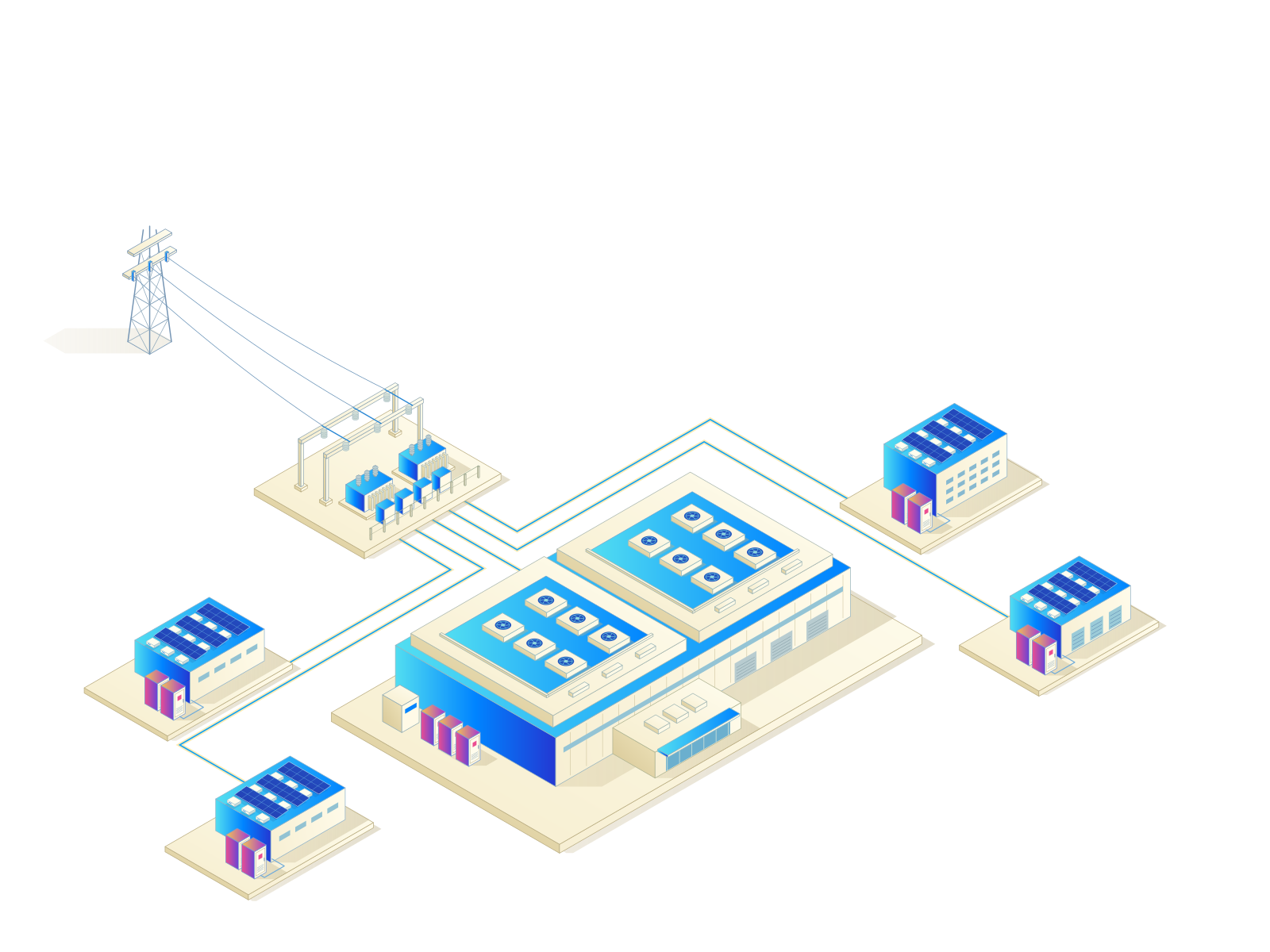
Electrical location matters. Batteries must reduce demand through the same network bottleneck that is holding the data centre back.

Blue Whale is developing a new way to make room for AI data-centre growth. Starting in Singapore, we’re bringing distributed batteries together to relieve the local grid bottlenecks that hold expansion back.
The Cost of Waiting
A year of waiting can mean millions in unrealised rental revenue.
01
A data centre can have capacity awarded on paper and still be unable to use it all.


02
In Singapore, constraints in the local electricity network can leave operators waiting five years or more for the upgrades needed to power their expansion.
03
The consequences reach beyond an electricity connection. Space remains underused. Computing capacity stays unavailable. Potential revenue is deferred with every year of delay.

Potential annual revenue at stake
Illustrative example
For every 20 MW of data-centre capacity waiting for power.
Calculation and source
20,000 kW × US$330/kW/month × 12 months = US$79,200,000 per year
This illustration applies US$330/kW/month, the lower end of CBRE’s published Singapore range. Actual rates vary by data centre. It assumes the capacity could otherwise be leased and shows revenue before costs—not figures from an actual customer or data centre.

Backed by investors in energy and technology.


Bring Your Own Capacity
Bring Your Own Capacity connects a data centre’s need for power with the flexibility of batteries at surrounding businesses. Blue Whale brings together the sites, equipment and controls to deliver that flexibility where the grid needs it.
Electrical location matters. Batteries must reduce demand through the same network bottleneck that is holding the data centre back.
A useful fleet needs coordinated control.
When batteries supply local businesses during peak periods, less electricity needs to pass through the constrained part of the grid.


How BYOC Works



How BYOC works
Explore how batteries across a district can work together as demand rises, conditions change and the grid needs relief. A shared network. The data centre and surrounding businesses draw electricity through a shared part of the grid. Batteries connected behind the relevant bottleneck can help reduce the demand passing through it.
Illustrative operating scenario. The figures shown explain the proposed approach and are not measured BYOC pilot results.
The animated view is unavailable. You can still follow each stage using the arrows or continue to the benefits.
More room for growth
A dependable way to relieve local grid constraints could create value for the businesses using power, the sites hosting batteries and the wider economy.
For data centres
Earlier access to usable power could bring expansion forward, serve customers sooner and turn more of an existing site into productive computing capacity.
Blue Whale takes responsibility for assembling and operating the distributed fleet.
For host businesses
Commercial and industrial sites can earn from hosting batteries and providing flexibility through their electricity connections.
A warehouse, factory or commercial building can become part of the infrastructure supporting the next wave of digital growth.
For the grid
Targeted battery support can help make better use of existing substations and cables while longer-term upgrades progress.
That creates an opportunity to support growth while maintaining the reliability the electricity system depends on.

The work behind the idea
Blue Whale already has batteries deployed at commercial and industrial sites across Singapore.
Behind those deployments is the practical work of bringing sites, equipment, installation partners and operating systems together. Our control technology connects individual batteries to a coordinated fleet, with local response and fallback capabilities built into the design.
With AI data-centre partners, we’re preparing to begin a self-funded BYOC pilot programme in Q1 2027.
The programme will test dependable dispatch across different operating conditions and measure the resulting relief on the local network. The aim is to build evidence that EMA and SP can assess when considering a path to additional usable capacity.
Existing Blue Whale battery deployments


Kallang
Battery storage at a commercial site.

Jurong
Ground-mounted and rooftop batteries supporting cold-storage operations.

Tampines
Battery storage at a large retail site.
one-north
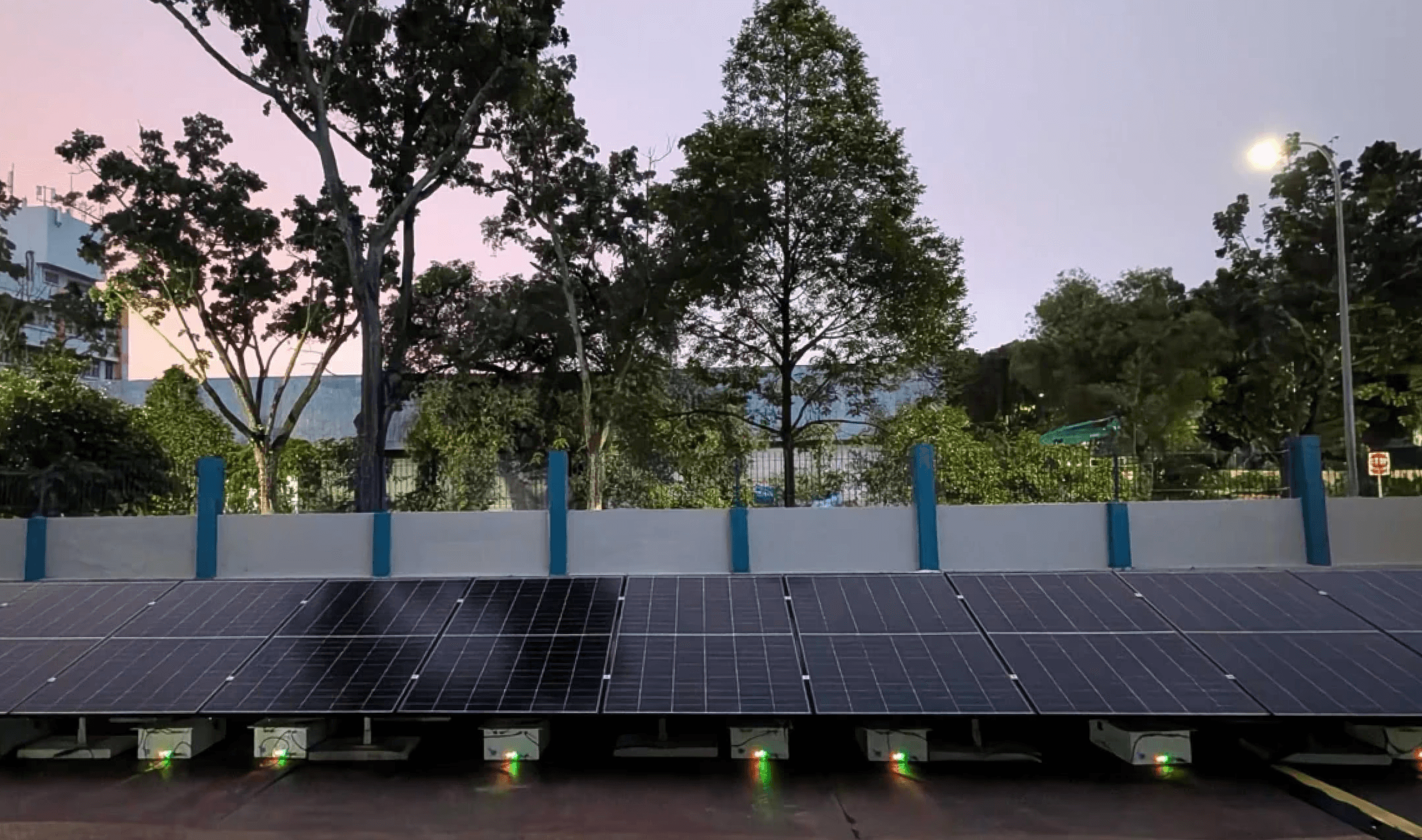
Rooftop battery storage paired with solar.

Aljunied
Battery storage at a corporate office building.

Operating within Singapore’s energy market
Blue Whale participates in Singapore’s VPP Regulatory Sandbox and is a registered participant in the National Electricity Market of Singapore.
EMA VPP Regulatory Sandbox & Wholesaler License

EMC Market Participant

SIEW 2025 Honouree

The VPP sandbox tests energy and ancillary services. The proposed BYOC capacity pathway requires its own assessment; these credentials do not constitute approval for additional data-centre power. Read EMA’s announcement. EMC’s participant register
BYOC explained
Looking for answers? Explore common questions and get the information you need, all in one place.
Talk to us
How can a few hours of battery support help a data centre that runs all day?
−
The data centre continues to draw power from the grid. The batteries reduce demand through the relevant bottleneck during the periods when the network is most constrained.
At quieter times, they recharge using available network capacity. The opportunity is to address the critical peak periods that can otherwise prevent additional data-centre demand from being connected.
What happens if communications or a battery fail?
+
Our architecture is designed to combine local site control with coordination across the fleet.
The planned pilot will test responses to interrupted telemetry and unavailable batteries, alongside different discharge requirements—including two-hour and four-hour profiles. These tests will help establish how much relief can be depended on, for how long, and under which conditions.
Has BYOC already unlocked additional power?
+
Not yet. Batteries are already deployed at distributed sites, and we’re preparing the BYOC pilot programme with AI data-centre partners.
The pilot will use simulated grid-dispatch instructions to test real battery responses and measure local network relief. Additional usable capacity would require the relevant network assessments and approvals.
Could the approach work elsewhere in Asia?
+
Our aim is to demonstrate the approach in Singapore, then follow our data-centre customers into other markets where they face suitable network constraints.
The technology and delivery experience can carry across. Each deployment still needs the right sites, local permissions and a clear understanding of the grid bottleneck.
There is an international precedent for the model: Google and Voltus announced a three-year agreement for up to 100 MW of distributed flexibility in the United States. Read Google’s announcement.


Starting in Singapore
Our ambition is to demonstrate BYOC in Singapore, then bring the approach to the markets where our customers are growing.
That means carrying forward the technology and the experience of delivering a coordinated fleet—while adapting to each local network.
If dependable battery relief can help data centres access power sooner, the opportunity reaches far beyond one site.
Platform
AI-powered Trading
Edge Gateway Hardware
Energy Storage
Visit us
Blue Whale Energy Pte Ltd. 75 Ayer Rajah Crescent, #01-02, Singapore 139953
© 2026 Blue Whale Energy Pte. Ltd. All Rights Reserved.